
 BACK
BACK
Sustainable Supply Chain


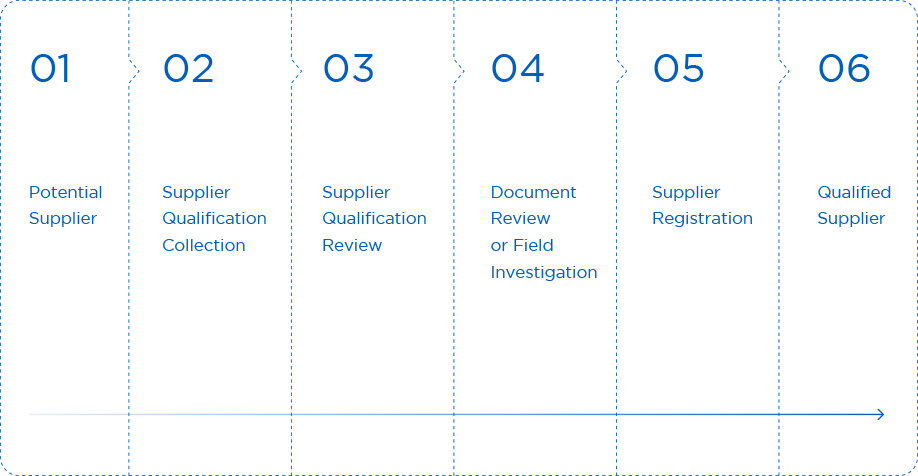
 In the management of suppliers' corporate social responsibility (CSR), BOE has established a comprehensive
supplier CSR management system by referencing RBA, SA8000, ISO 14001, and ISO 45001. Through four
sequential steps-entry commitments, document review, on-site audit, and improvement closure, a closed-loop
mechanism for supplier CSR management has been formed. In accordance with the Supplier’s CSR Management
Measures, we establish differentiated evaluation cycles based on supplier categories and conduct
regular CSR self-assessments. For key material suppliers who have signed the CSR acknowledgment letter,
CSR performance evaluations are generally conducted biennially. For those in labor-intensive sectors or
with lower levels of process automation, we mandate an annual CSR self-assessment to ensure closer
monitoring of social and operational risks.
In the management of suppliers' corporate social responsibility (CSR), BOE has established a comprehensive
supplier CSR management system by referencing RBA, SA8000, ISO 14001, and ISO 45001. Through four
sequential steps-entry commitments, document review, on-site audit, and improvement closure, a closed-loop
mechanism for supplier CSR management has been formed. In accordance with the Supplier’s CSR Management
Measures, we establish differentiated evaluation cycles based on supplier categories and conduct
regular CSR self-assessments. For key material suppliers who have signed the CSR acknowledgment letter,
CSR performance evaluations are generally conducted biennially. For those in labor-intensive sectors or
with lower levels of process automation, we mandate an annual CSR self-assessment to ensure closer
monitoring of social and operational risks. | Category Proportion |
Category | Key Issues | Improvement Achievements |
|---|---|---|---|
| 34% | Labor Management | The policies regarding child labor, young workers, or female employees needed further refinement. | Improved remedial measures for child labor, labor protection measures for young workers and female employees, and prohibited occupations in accordance with national laws and regulations. |
| The company's policies contain the terms "deduction of wages for late arrival or early departure" and "fines". | Reviewed all relevant policies, revised the descriptions, and issued salaries based on actual attendance hours. | ||
| Overtime hours are excessive, and some employees cannot guarantee at least one day of rest per week. | Each department strengthened monitoring of overtime duration, produced an analysis report on the reasons for overtime, increased staffing levels, and promoted rotational rest arrangements. | ||
| Relatively low completion rate of employee satisfaction surveys. | Increased the number of satisfaction survey forms distributed, urged employees to complete the surveys, and improved the completion rate. | ||
| 32% | Safety and Occupational Health | The chemical cabinet storing hazardous chemicals on-site lacks electrostatic grounding protection, and fire-fighting facilities are not provided in the surrounding area. | In accordance with hazardous chemical control requirements, chemical storage cabinets were equipped with static grounding and fully supplied with necessary emergency materials. |
| Fire escape and evacuation signage needed to be thoroughly installed in certain areas of the site. | In accordance with fire safety regulations, necessary escape and evacuation signage was provided on-site, and drills were conducted regularly. | ||
| In workplaces with occupational hazard factors, the results of occupational disease hazard factor testing needed to be disclosed. | Regularly publicized and updated the test results for occupational hazard factors in accordance with the detection frequency stipulated in the occupational hazard evaluation/report regulations. | ||
| 17% | Environmental Management | The on-site hazardous waste warehouse or storage area was not equipped with spill containment materials, and warning signs for hazardous waste needed to be thoroughly posted. | In accordance with the management requirements of the Control Standard for Pollution from Hazardous Waste Storage and the Technical Specification for Setting Identification Signs for Hazardous Waste, spill containment materials were equipped, and warning signs were posted. |
| Carbon inventory needed to be conducted, and carbon reduction targets needed to be established. | Conducted greenhouse gas verification to understand the Company's carbon emission status, performed comparative analysis, established future decarbonization targets, and responded to decarbonization requirements from both national authorities and customers. | ||
| 12% | Management System | The annual goals and action plan lack risk identification, objectives, and action plans related to labor and business ethics. | Incorporated risk identification, objectives, and action plans related to labor and business ethics into annual goals and action plans and promoted their implementation. |
| The internal audit report and management review report lack content regarding labor and business ethics reviews. | Regular audits related to labor and business ethics were conducted in accordance with the established annual goals and action plans, and the audit results were reflected in the internal audit reports and management review reports. | ||
| 5% | Business Ethics | Self-inspection on integrity and honesty was not regularly organized for employees. | Established a self-check form for integrity and honesty or included regular self-check content in performance appraisals. |
| The policy does not specify reporting channels or information protection measures for whistleblowers. | Improved policies, clarified reporting channels, and committed to strictly protecting the confidentiality of whistleblowers' information while prohibiting any form of retaliation. |










The BOE Global Supply Partner Conference (BOE SPC) is a premier annual supply chain ecosystem event for the global display industry. It serves as a core platform for the Company to practice its “Empower IoT with Display” strategy and build a globally collaborative supply chain system.

In June 2026, the BOE Global Supplier Partnership Conference 2026 (BOE SPC 2026) grandly opened in Chongqing. This year's conference attracted over 1,100 participants from more than 600 partner companies across more than 10 countries. Under the theme "Empower IoT with Display, Win-Win Beyond Boundaries," the conference elaborated on BOE's strategic pathway to open up new tracks and create new opportunities for global partners under the guidance of the "Nth Curve" theory, focusing on four dimensions: technological innovation, strategic synergy, global presence, and green compliance. During the conference, BOE signed strategic cooperation agreements with 30 suppliers, recognized 74 outstanding partners, innovatively introduced a tribute session for 20-year partners, and released the "BOE Supply Chain White Paper 2026" for the first time, further strengthening BOE's supply chain influence within the industry.

In May 2025, BOE hosted the Global Supply Partner Conference in Qingdao under the theme “Empower IoT with Display, Co-thrive in Symbiosis.” The event saw a record-breaking scale, with over 1,000 representatives from 585 global suppliers in attendance. This conference integrated sustainable development concepts into every stage of the agenda, joining hands with partners to promote the green development of the industrial ecosystem.
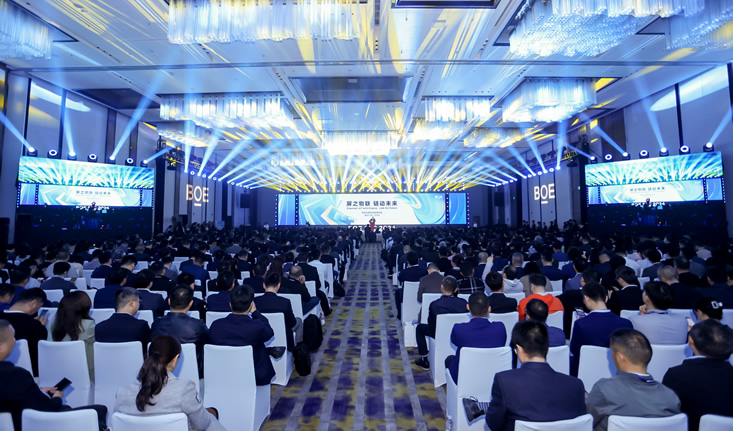
In March 2024, the highly anticipated BOE Global Supply Partner Conference 2024 (BOE SPC 2024) was grandly held in Chengdu, the Land of Abundance. A prestigious influential supply chain event in the display industry, the 6th conference took the theme of "Empower IoT with Display, Chain the Future". It brought together over a thousand top industry experts, outstanding supplier representatives and elites from across the globe. The event unveiled forward-looking industry prospects and featured insightful keynote speeches. BOE honored suppliers with outstanding achievements in technology, quality and service, advocating coordinated and sustainable industrial development.Leveraging its leading edge in display technologies, BOE will cooperate with suppliers to build certified green systems, adhere to low-carbon, harmless and low-consumption production models, foster a sustainable industrial ecosystem and elevate high-quality development of the display sector.


